Southern Canigó Hike

Multi-day hiking in the Catalan Pyrenees
A hut-to-hut hike along the southern slopes of Canigó in the Eastern Pyrenees
Four days of hiking between Prats-de-Mollo-la-Preste and Arles-sur-Tech, along the southern slopes of Canigó, a designated Grand Site de France.
5 days on site, with 1 night in a hotel and 3 nights in mountain refuges, full board, and 4 days of mountain hiking.


The Haut-Vallespir, from Prats-de-Mollo-la-Preste to Arles-sur-Tech, in the heart of the Catalan Pyrenees
The Haut-Vallespir is a mountainous region with a strong character, nestled in the Pyrénées-Orientales in the far south of France, on the edge of Spanish Catalonia. Centred around the Tech Valley, this area stretches between Arles-sur-Tech and Prats-de-Mollo-la-Preste, following a river that has shaped its landscapes, villages and history.
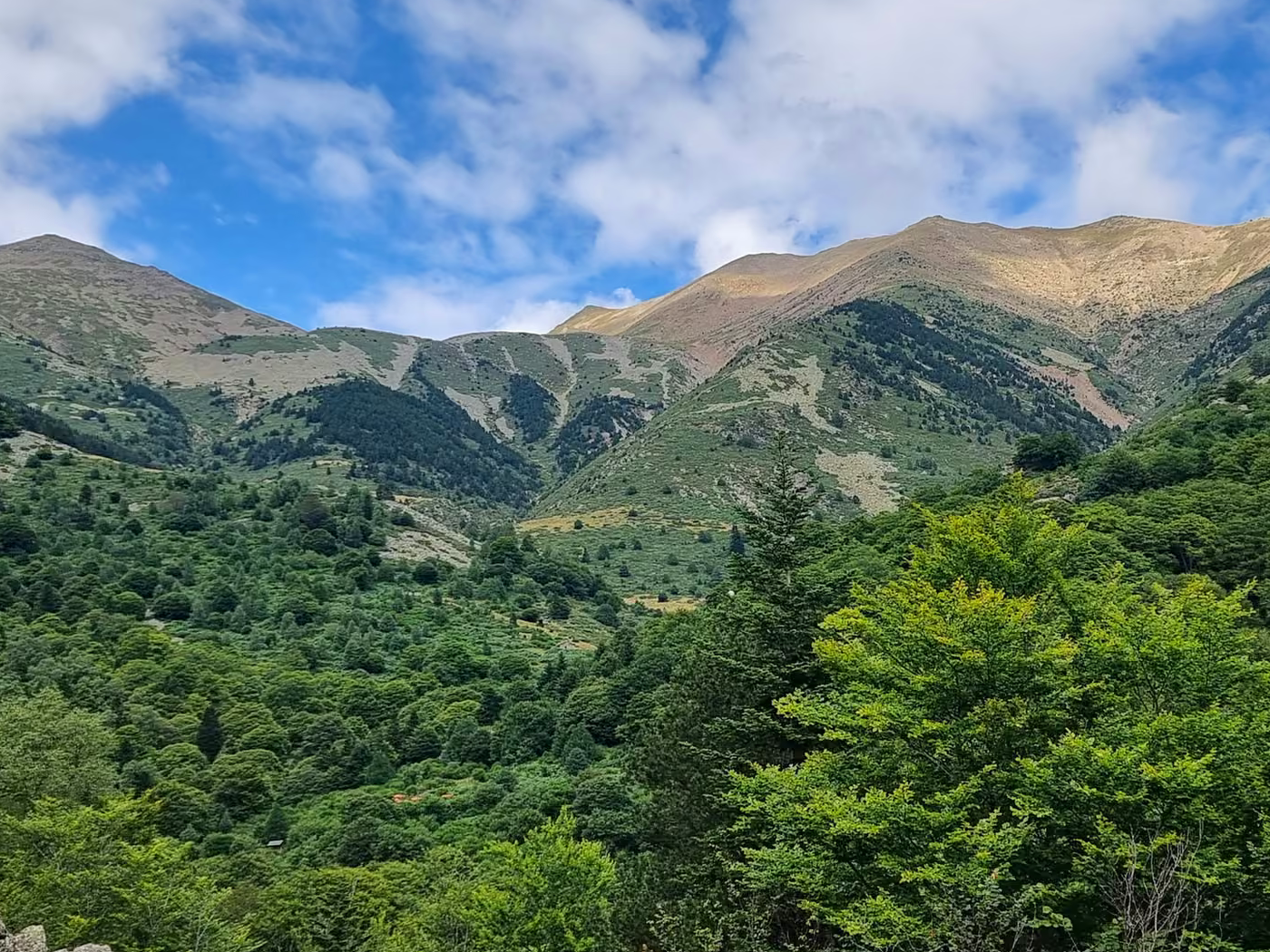
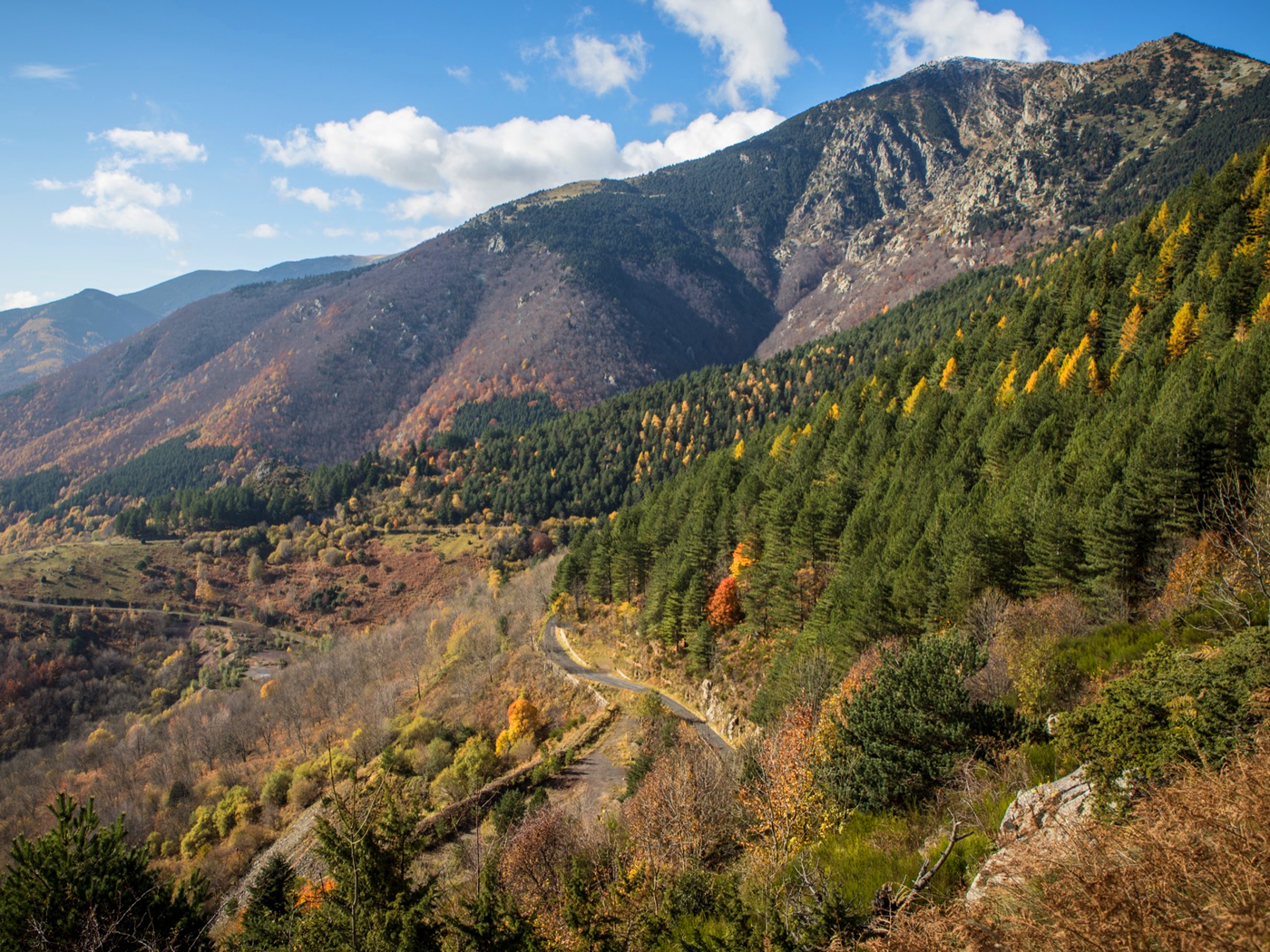
Here, the Pyrenees reveal an authentic and unspoilt side. The terrain rises gradually towards the border peaks, valleys grow narrower, streams rush down the slopes, and beech, chestnut and pine forests cover the hillsides. With its wild gorges, ancient paths, high-altitude meadows and views across the Catalan mountains, the Haut-Vallespir offers a remarkable variety of landscapes.
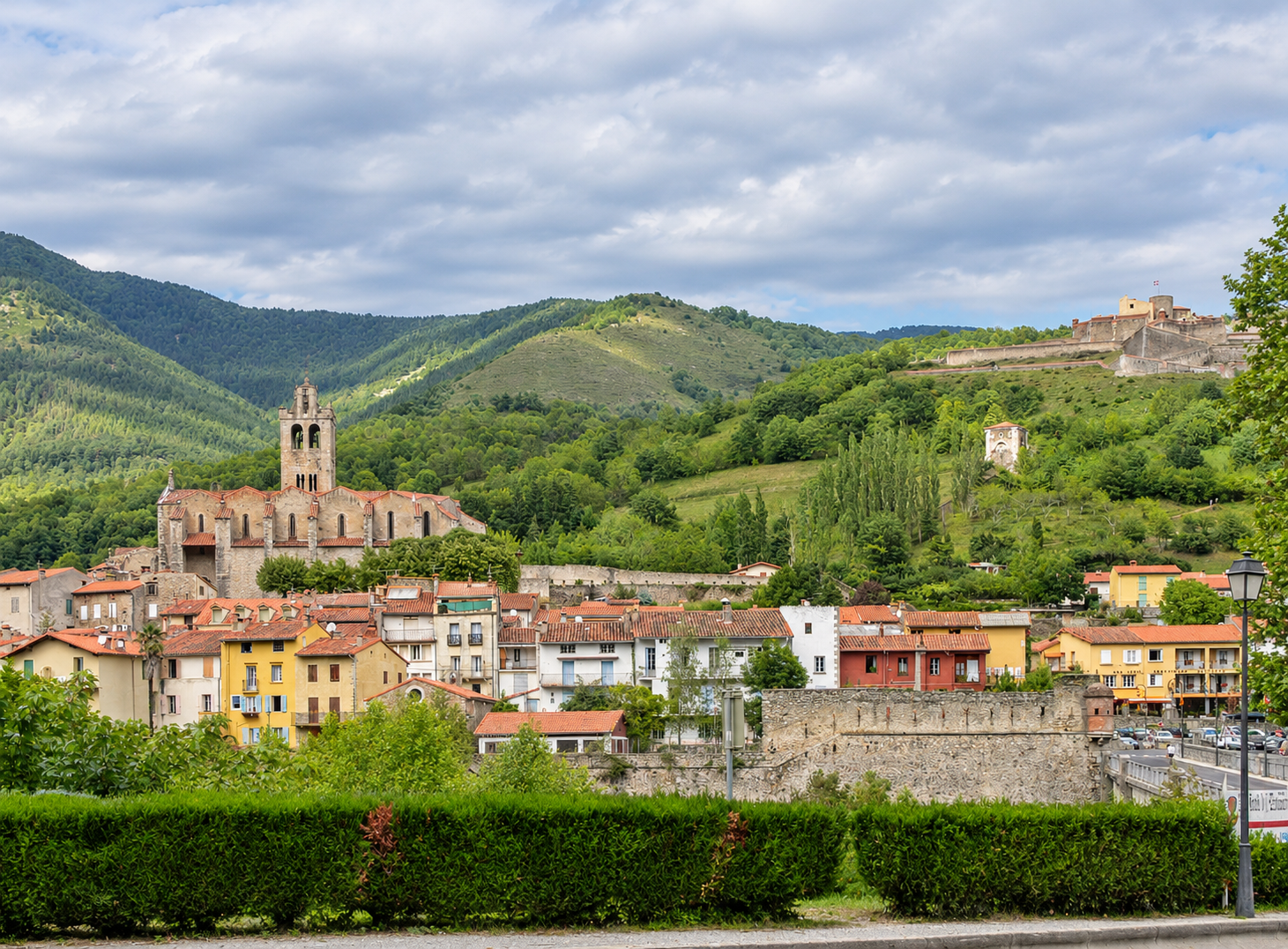
At the heart of this region, Prats-de-Mollo-la-Preste holds an iconic place. This fortified medieval town, dominated by Fort Lagarde, has retained a deeply rooted Catalan mountain identity. Further up the valley, the thermal hamlet of La Preste is a reminder of the thermal waters that helped make the area famous. The surrounding trails lead to wide open mountain spaces, deep forests and ridges close to the Spanish border.
As you follow the Tech downstream towards Arles-sur-Tech, the scenery gradually changes. The mountains give way to broader valleys, narrow gorges, stone-built villages and landscapes shaped by a long agricultural and craft tradition. Serralongue, Le Tech, Lamanère, Saint-Laurent-de-Cerdans and Arles-sur-Tech each bear witness to this mountain heritage and the region’s cultural richness.
The Haut-Vallespir is also a land of passage and encounters. For centuries, paths have connected French and Catalan valleys, crossed mountain passes and encouraged exchanges between communities on either side of the Pyrenees. Its proximity to Spanish Catalonia has shaped a distinctive identity, where the Catalan language, folk traditions, gastronomy and local skills still play an important role.
From Prats-de-Mollo-la-Preste to Arles-sur-Tech, the Haut-Vallespir invites you to discover a vibrant, welcoming mountain region with a strong sense of identity. It is an ideal place to take your time, walk the trails, explore its villages and rediscover the pleasure of wide-open spaces in nature with many different faces.
Key features of the Haut-Vallespir
- Location: Located in the Pyrénées-Orientales, the Haut-Vallespir is centred around the Tech Valley, between Arles-sur-Tech and Prats-de-Mollo-la-Preste, close to the Spanish border. It includes the villages of Arles-sur-Tech, Montferrer, Corsavy, Saint-Laurent-de-Cerdans, Serralongue, Le Tech, Lamanère and Prats-de-Mollo-la-Preste.
- Wildlife and flora: The variety of altitudes and exposures encourages particularly rich vegetation. Oaks, chestnut trees, beeches, pines and mountain meadows shape the landscape. These natural environments are home to diverse wildlife, including wild boar, roe deer, chamois in higher areas, foxes, birds of prey and many other bird species. Nature lovers will enjoy the opportunities to spot wildlife along the trails.
- Ecosystems: The Haut-Vallespir features a succession of natural environments typical of the eastern Pyrenees. From valley floors to wooded slopes, from the Tech Gorges to high-altitude meadows, the scenery changes with the terrain and Mediterranean influences. Streams, springs, forests and open spaces form a particularly rich natural mosaic for hikers.
- Heritage and villages: The region has a remarkable historical heritage. Prats-de-Mollo-la-Preste and its fortifications, Fort Lagarde, old mule tracks, Romanesque churches, isolated farmhouses and mountain villages all reflect a history closely linked to cross-border exchanges, farming and pastoral life. In Arles-sur-Tech, Sainte-Marie Abbey is a major landmark in the medieval history of the Vallespir.
- Catalan identity and traditions: The Haut-Vallespir is a region deeply marked by its Catalan identity. The language, place names, traditional festivals, dances, gastronomy and local skills keep a living culture alive. Historical links with the neighbouring valleys of Spanish Catalonia have shaped a shared identity on both sides of the Pyrenees. This Catalan heritage gives the region a special character, rooted in its attachment to the mountains, traditions and local life.
Why hike in the Haut-Vallespir?
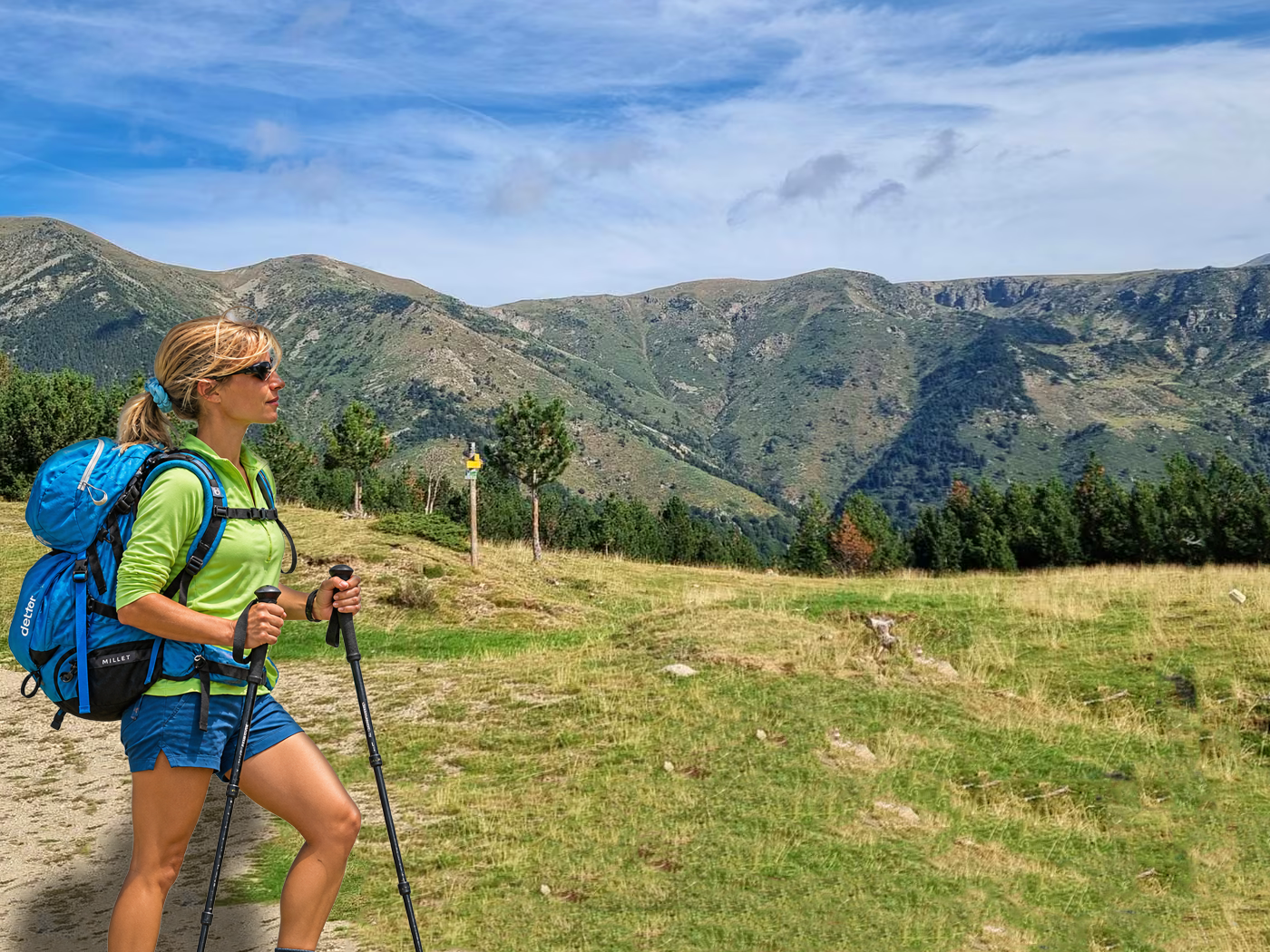
- Hiking in the Haut-Vallespir means discovering an authentic mountain region, away from the main tourist routes. Between Prats-de-Mollo-la-Preste and Arles-sur-Tech, trails cross varied landscapes of deep forests, streams, panoramic ridges, wild gorges and charming small villages.
- The area around Prats-de-Mollo-la-Preste offers wonderful routes for exploring the high mountains of Catalonia. Paths gradually climb towards summer pastures, mountain passes and border ridges, with superb views over the Pyrenees and surrounding valleys.
- As you descend towards Le Tech, Serralongue and Arles-sur-Tech, the routes reveal another side of the region: ancient paths, woodland trails, isolated hamlets and rural heritage shaped by generations of mountain communities.
- It is also a chance to walk through villages where Catalan culture remains very much alive, discover remarkable historical heritage and meet a region that has managed to preserve its character.
- The Haut-Vallespir is an ideal destination for hikers seeking variety, tranquillity and wide-open spaces. Whether you want to enjoy a day walk or set off on a multi-day hiking journey, these mountains offer many ways to explore.
Other activities and discoveries in the Haut-Vallespir
- Wildlife watching: The forests and mountain areas of the Haut-Vallespir are excellent places to observe wildlife. Along a trail, at the edge of a wood or in high-altitude meadows, you may spot roe deer, hinds and stags, chamois, wild boar, foxes, birds of prey and vultures. Patience and discretion are a hiker’s best allies.
- Photography: The Haut-Vallespir offers a wide variety of photographic subjects. From the medieval streets of Prats-de-Mollo to the forest landscapes of the upper valley, from the Tech streams to mountain panoramas, the atmosphere changes with the seasons and the light. Stone villages, ancient paths, waterfalls and high-altitude scenery all offer opportunities to capture the authentic character of the Catalan Pyrenees.
- Discovering the heritage: Fortifications, abbeys, Romanesque churches, ancient transhumance routes and traditional villages tell the story of a region shaped by the mountains and exchanges between the two Catalonias. Fort Lagarde in Prats-de-Mollo and Sainte-Marie Abbey in Arles-sur-Tech are two essential sites for understanding this rich history.
- Well-being and thermal waters: At La Preste, thermal waters have been part of a long-standing tradition. This spa resort, located above Prats-de-Mollo, offers another way to discover the region, combining mountains, relaxation and well-being.
Southern Canigó Hike

5 days on site / 4 nights / 4 hiking days
A multi-day hiking trip through the Haut-Vallespir region of the Eastern Pyrenees. Accommodation, meals, luggage transfers and passenger transfers are included.
Prats-de-Mollo-la-Preste and Arles-sur-Tech
- Meet in Arles-sur-Tech, park your vehicle and transfer to the hotel in Prats-de-Mollo-la-Preste. Check in, receive a presentation of the trip and enjoy dinner at the hotel.
- Pickup can also be arranged from Perpignan railway station or airport (transfer supplement applies).
From La Preste to l’Ollat, and on to Les Conques Refuge:
- Distance: 11.4 km – Elevation gain: 766 m – Walking time: 04h00
- Breakfast
- Minibus transfer to La Preste.
- A hike through the heart of the Costabona mountains. Starting from La Preste, this route gradually leads us into the wild heights of the Haut-Vallespir. Here, the mountains reveal their authentic character, with deep forests, rushing streams, secluded valleys and vast natural spaces where time seems to stand still. The trail climbs through the forested landscapes of the upper Tech Valley. Beneath beech trees and mountain pines, we make our way at the mountain’s own pace. Woodland alternates with clearings and more open areas, offering glimpses of the surrounding ridges. Gradually, we gain height and reach the l’Ollat area, with its former grazing grounds and huts that bear witness to the pastoral life that once animated these mountains. In this unspoilt mountain setting, the views open up. Forests give way to high-altitude meadows, paths cross wilder terrain and the presence of grazing herds reminds us that these summer pastures remain places of life and tradition.
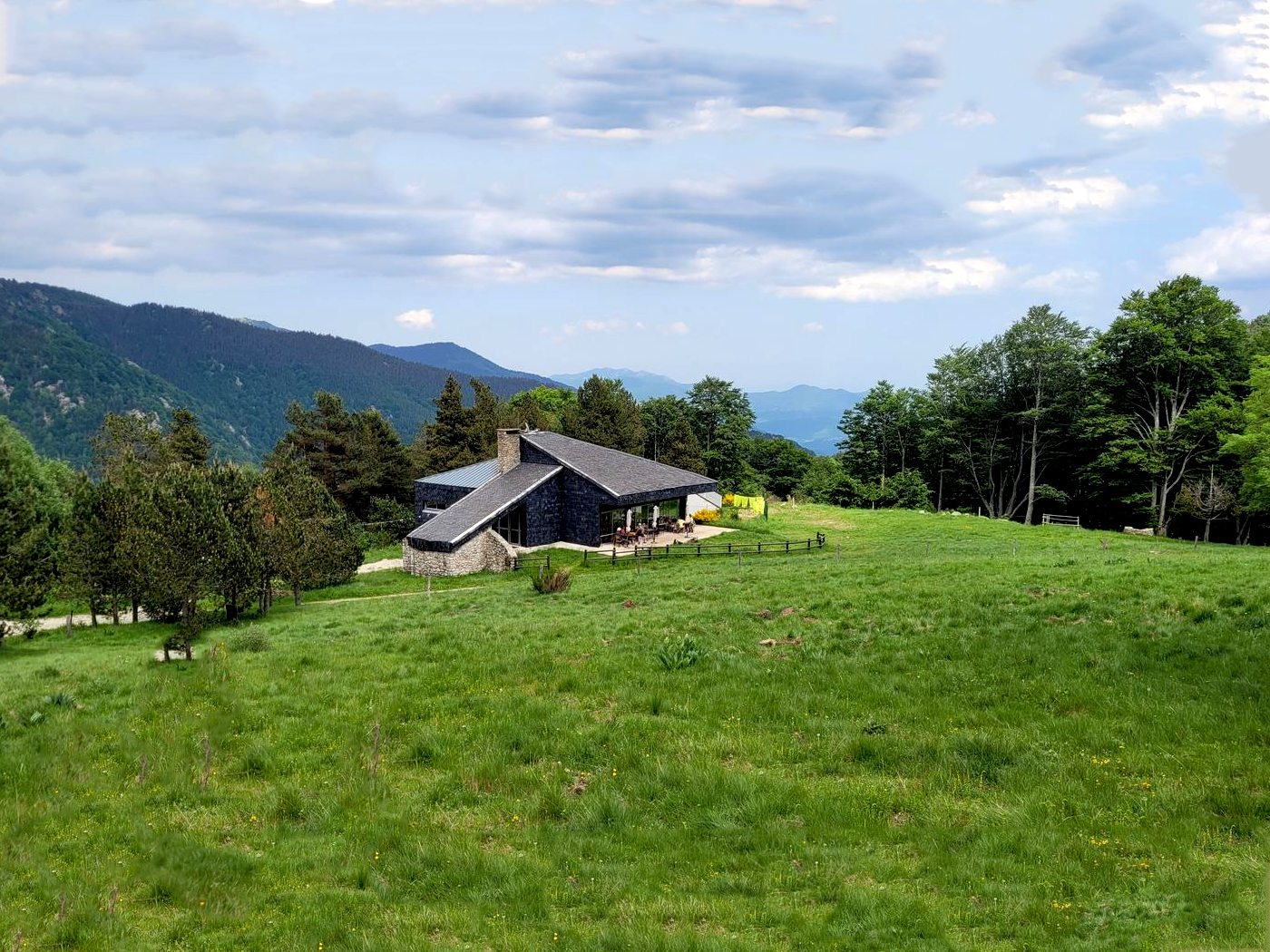
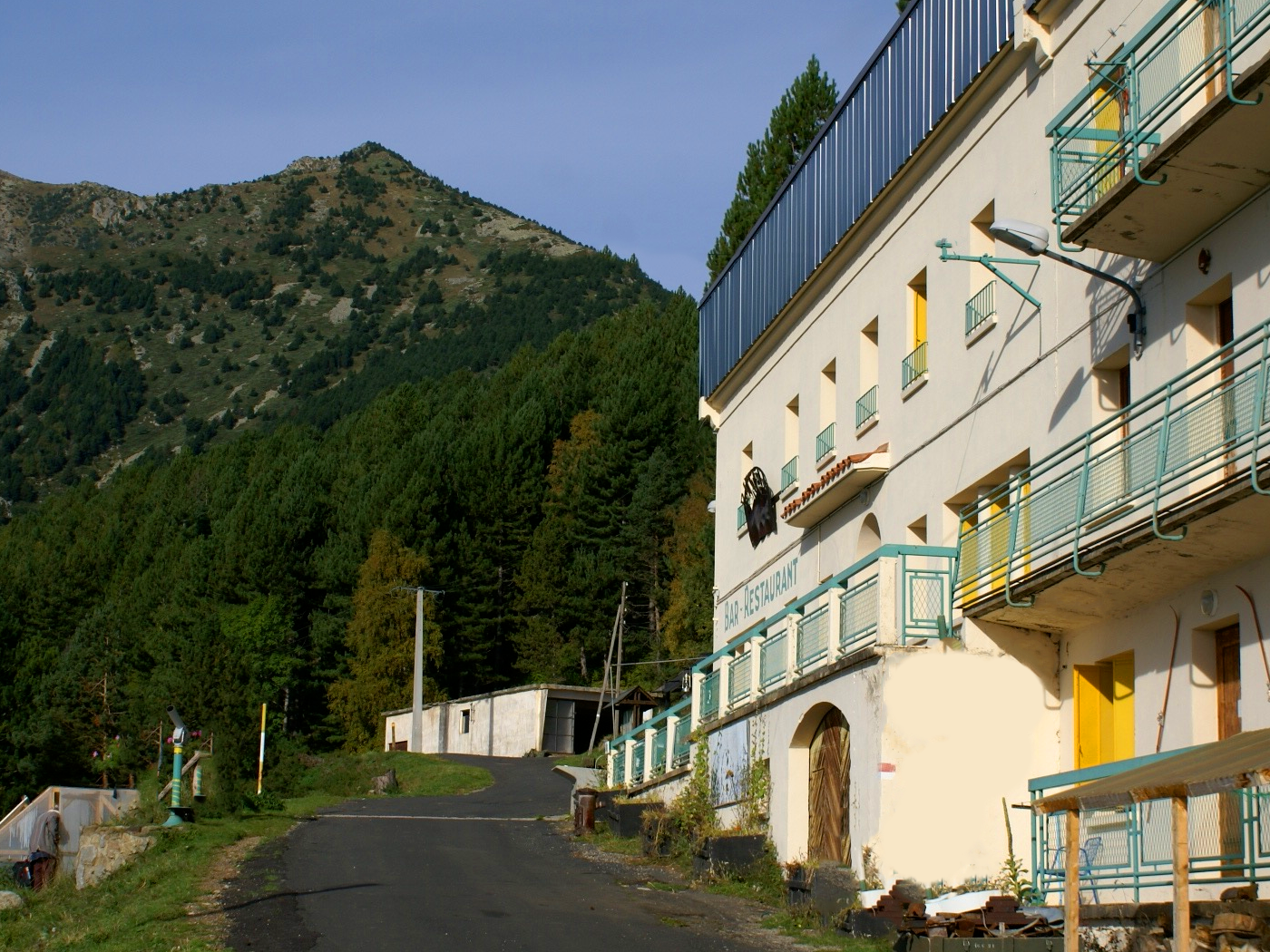
The hike continues towards Les Conques Refuge, nestled at an altitude of 1,580 metres in an exceptional mountain environment. Located near the sources of the Tech and the Esquerdes de Rotjà ridges, the refuge is a wonderful place to enjoy the Catalan mountains.
Arriving at Les Conques offers a true escape into nature. Far from the bustle of everyday life, you can enjoy the simple pleasures of hiking: walking, taking in the views, breathing the mountain air and savouring the tranquillity of a mountain refuge.
A beautiful hike in the Catalan Pyrenees, through mountain forests, high-altitude pastures and wild trails, discovering the unspoilt and captivating Haut-Vallespir.
Check in at the refuge, dinner and overnight stay.
From Les Conques to Sant Guillem – Crossing the wild mountains of the Haut-Vallespir (the most physically demanding day):
- Distance: 11.4 km – Elevation gain: 766 m – Walking time: 04h00
- Breakfast
- Starting from Les Conques Refuge, this stage takes us into the vast mountain landscapes of the Haut-Vallespir. We gradually leave the upper valley behind and head towards the open ridges overlooking the forests and valleys around Prats-de-Mollo-la-Preste.
- The trail climbs towards Coll de les Basses, a landmark pass in these Catalan mountains. As we gain altitude, the views widen to reveal magnificent panoramas of the Canigó massif and the border mountains. Vast pastures, high-altitude heathland, mountain pine forests and distant horizons create a wild, unspoilt setting.
- The route continues through the forest towards Puig dels Sarraïns, which rises to 1,830 metres. This understated summit offers fine views of the surrounding mountains and a remarkable vantage point over the Haut-Vallespir. The trails cross natural areas where pastoral activity is still very much present.
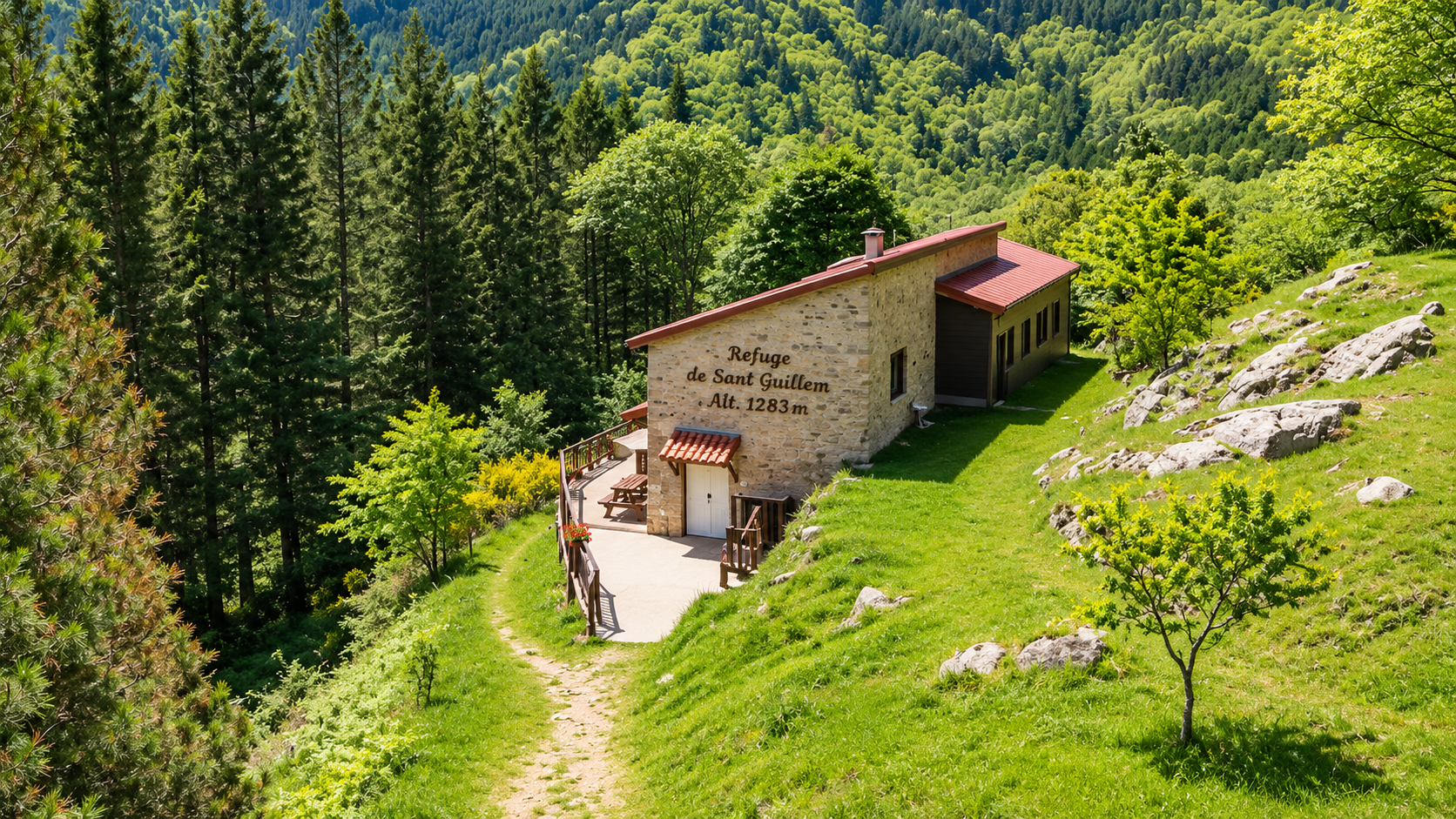
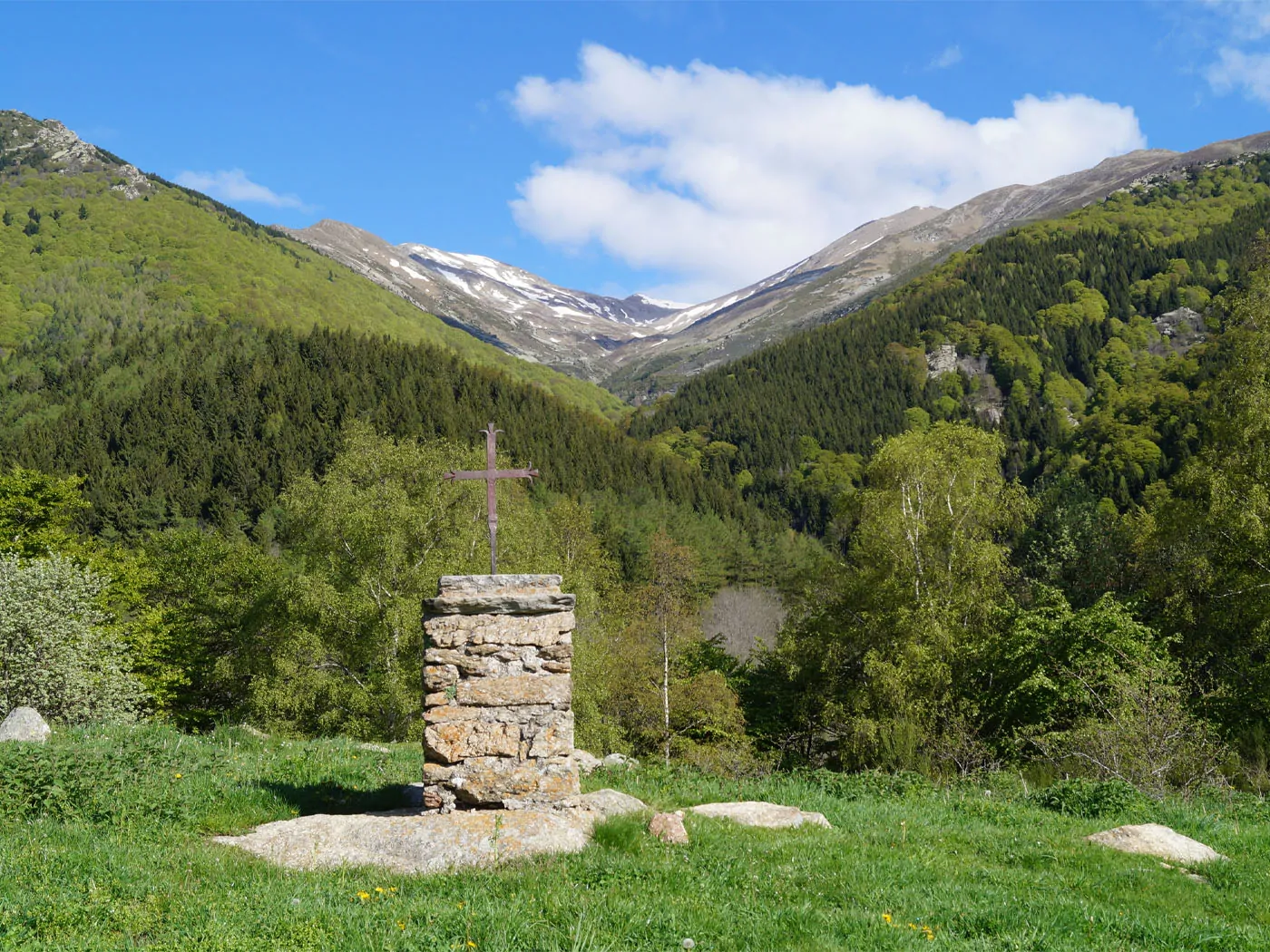
- After this high-altitude crossing, the route descends towards Sant Guillem. Beech woods and mountain forests reappear, bringing us back into a more wooded setting. The chapel of Sant Guillem de Combret bears witness to an ancient human presence in these mountains. Sant Guillem Refuge, nestled in woodland at 1,283 metres, is a peaceful and welcoming place to rest after a rewarding day on foot.
- A memorable crossing between wide high-altitude landscapes, Pyrenean panoramas and deep forests, discovering the wild and authentic Haut-Vallespir.
Check in at the refuge, dinner and overnight stay.
From Sant Guillem to Batère – Through wild forests and the mining history of Canigó
- Distance: 11.4 km – Elevation gain: 766 m – Walking time: 04h00
- Breakfast
- Starting from Sant Guillem Refuge, this stage follows the southern slopes of the Canigó massif through one of the most secluded and unspoilt parts of the Haut-Vallespir. A wonderful day of hiking through deep forests, mountain streams, high-altitude clearings and ancient paths steeped in history.
- We leave Sant Guillem and its Romanesque chapel, climbing beneath the beech trees towards Coll de l’Estanyol. As we gain altitude, views open onto the surrounding mountains and wooded valleys descending towards the Tech. The trail crosses clearings and reaches the former summer pastures of La Devesa, where huts recall the long pastoral tradition of these Catalan mountains.
- The route continues across wild slopes, alternating balcony trails, forest crossings and open sections. We cross valleys including the Riuferrer, before climbing towards the wooded slopes of Canals de Leca. The silence of the forests, the murmur of streams and views over the Haut-Vallespir accompany us.
- Near Coll d’en Cé, the landscape reveals a region once marked by iron ore mining. Old paths, mining remains and traces left by generations of miners tell the story of an industry that has ended but remains visible in the landscape.
- Our arrival at Batère, above Corsavy, marks the end of this crossing. Once an important iron-mining centre, the site still bears witness to its past. Batère Refuge, housed in a former miners’ canteen, continues the tradition of welcoming visitors to these mountains.
After a day hiking through the forests and ridges of Canigó, Batère offers a warm stop in a setting where industrial heritage, wild nature and Catalan mountain culture meet.
A stage full of contrasts, between the tranquillity of the Haut-Vallespir forests and the mining history of Batère.
Check in at the refuge, dinner and overnight stay.
From Batère to Arles-sur-Tech – Descending along the GR10, from the Canigó mountains to the Tech Valley
- Distance: 11.4 km – Elevation gain: 766 m – Walking time: 04h00
- Breakfast
- For this final stage, we leave Batère and its mining past, gradually returning to the landscapes of the Tech Valley. This beautiful descent along the GR10 takes us from high mountain terrain to the Mediterranean atmosphere of the Haut-Vallespir. From the former mining site, the trail reaches Coll de la Descarga, then follows old paths once used to serve the mining facilities. Galleries, mining remains and transport routes recall the importance of iron ore mining in the Canigó massif.
- The descent continues along wooded slopes towards the Riuferrer Valley. Mountain forests gradually give way to chestnut groves, oaks and Mediterranean species. The trail winds between the trees, crosses former agricultural landscapes and offers lovely views over the Vallespir.
- As we lose altitude, we reach the first houses and the more open valley landscapes. The path leads to Arles-sur-Tech, a small Catalan town nestled in a bend of the Tech at the foot of the mountains.
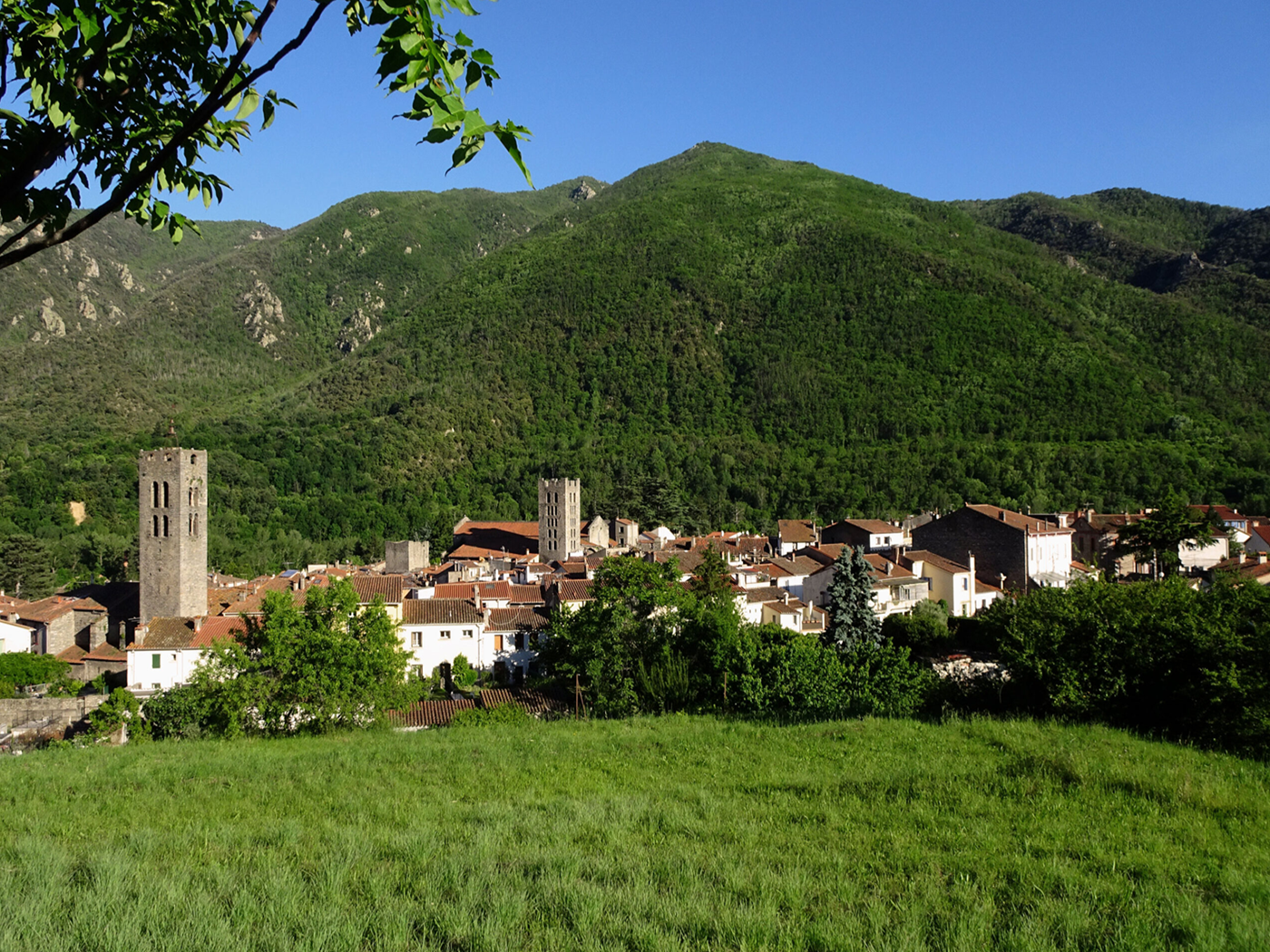
- Arriving in the village marks the end of this journey through the Haut-Vallespir. Take time to discover its heritage: Sainte-Marie Abbey, founded in the 8th century, its remarkable Gothic cloister and the mysterious Sainte Tombe are among the region’s historical treasures.
- A final stage rich in history and contrasts, concluding this crossing among wild mountains, mining heritage and Catalan villages. From the heights of Batère to the Tech Valley, the GR10 provides a magnificent end to this multi-day hike.
- End of the trip for the group in the late afternoon.
- Transfer for participants arriving by train or plane.
- Prats-de-Mollo-la-Preste: 2-star hotel (1 night)
- Les Conques Refuge: 1 night
- Sant Guillem Refuge: 1 night
- Batère Refuge: 1 night
Subject to availability at the time of booking.
5 days on site, 4 hiking days, 1 hotel night + 3 nights in mountain refuges
- Self-guided hiking + accommodation + full board* + luggage transfer: €535 / person
- Single-room supplement (hotel): + €20 / person
- Return transfer from Perpignan railway station or airport: + €30 / person
* Full board: packed lunch + evening meal + overnight accommodation in the hotel
Select one of the departure dates marked in red:
Your itinerary
From €575
✓ Online booking
✓ Confirmation subject to availability
Booking service
Mountain refuge stopovers
Prats-de-Mollo, La Preste, Le Tech and Corsavy.
Unspoilt nature
The Pyrenees at their most magnificent…
Responsible tourism
Trips designed by a local travel agency in collaboration with local partners
Set off on foot to discover the exceptional natural heritage of the Canigó Grand Site, following the mountain trails of Catalan country at your own pace. Enjoying the region’s riches through hiking and stays in mountain refuges is a way to support more responsible tourism that respects the environment and rural life.
- Walk gently, respect the trails, protect natural habitats and avoid trampling vegetation.
- Support rural communities by choosing local shops and producers.
- Travel light and reduce your impact: minimise waste and choose durable equipment.
- Take time to discover the region on foot. Exploring at walking pace lets you immerse yourself in nature without disturbing it.